The 2030 Agenda
The Association of Health Care Professionals (AHCP) aligns its initiatives with the UN's 2030 Agenda, focusing primarily on Sustainable Development Goal 3 (Good Health and Well-being). Key initiatives include deploying community healthcare services, establishing medical education centers, and championing research.
Supporting The United Nations 2030 Agenda
The AHCP Supports the UN's 2030 Agenda and the 17 Sustainable Development Goals (SDGs) Through Many Global Projects. Some of them are Published on this Page, Under Sections 1 to 4 Below:
SECTION 1:
Science, Technology and Innovation
The role and contributions of science, technology and innovation to the achievement of the Sustainable Development Goals: Description of the AHCP Initiatives
SECTION 3:
The AHCP Commitments to the SDGs
Sustainable Development Goals (SDGs): The Association of Health Care Professionals (AHCP)’s Initiatives in Achieving the 2030 Agenda
SECTION 2:
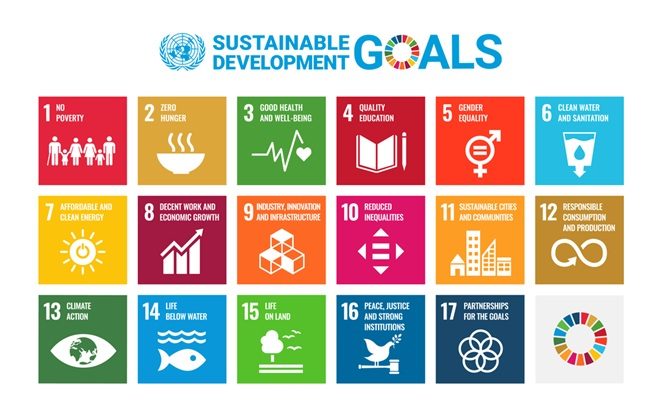
Impacts and Current Insights and Status of the 17 SDGs
The AHCP Examination of the Impacts and Current Insights and Status of the 17 SDGs.
SECTION 4:
AHCP information about the 2030 Agenda & the SDGs
AHCP information about the 2030 Agenda and the Sustainable Development Goals (SDGs)
Workshop/Seminar Teaching by the AHCP 2030 Agenda Steering Group.
SECTION 1:
Science, Technology and Innovation
The role and contributions of science, technology and innovation to the achievement of the Sustainable Development Goals: Description of the AHCP Initiatives
By
Joint AHCP and SMC Research and Development Team
Introduction
The Association of Health Care Professionals (AHCP), which was founded in 1930 in Europe, is an international not for profit membership organisation for multidisciplinary healthcare professionals, which includes doctors, nurses, pharmacists, engineers, technologists, Informaticists, innovators and all professionals that work in healthcare settings globally. Hence, the AHCP promotes excellence in medical practice, engineering, technology, sciences, innovation, humanitarian work, ambassadorial work and community development internationally. Thus, the Association encourages science, technology, innovation, research, humanitarian programmes, community developments and educational activities for healthcare professionals worldwide under its well established AHCP Global Projects.
In addition, at the AHCP and its consortia, membership services and collaborating organisations, it is widely recognised prior to 2015 that Science, Technology, and Innovation (STI) are very important for global sustainability, community development and growth. That's why it was easier and quicker for our organisation to embrace the 2030 Agenda and the Sustainable Development Goals (SDGs). In 2015, this process was seamless and was incorporated into our various global projects and programmes.
Thus, the STIs act as critical drivers for achieving the SDGs by providing scalable solutions to complex challenges like climate change, poverty, education and health. At our organisation and its wider affiliations, it is known that STI facilitates evidence-based policy, promotes renewable energy, improves resource management, and fosters economic growth through digital advancements. In this article, we describe he key roles and contributions of STI and the joint AHCP policy statements and conclusion.
Key roles and contributions of STI in our programmes that supports the SDGs.
STI act as the engine for the 17 Sustainable Development Goals (SDGs), providing the tools and knowledge needed to solve complex global challenges. The ways the STIs contribute to our various Global Projects, Economic Services, and Community Development and Health Programmes are described as follows:
1. Driving Economic Growth and Industry (SDGs 8, 9, & 12)
Innovation: New technologies create higher-productivity jobs and sustainable industries in the various regions we cover.
Efficiency: Digital tools and automation help industries use fewer resources, supporting responsible consumption and production in our different sponsored health, education and community development programmes internationally.
2. Solving Environmental Challenges (SDGs 7, 13, 14, & 15)
Clean Energy: Scientific breakthroughs in solar, wind, and battery storage make affordable and clean energy viable in the various communities that we support globally.
Climate Monitoring: Satellite data and AI-driven modeling allow us to track climate change and manage biodiversity more effectively in our global projects and regions of operations.
3. Improving Health and Well-being (SDGs 2 & 3)
Medical Innovation: Genomics, vaccines (like mRNA), and telemedicine directly improve global health and life expectancy have transformed our community health, education and medical projects globally, especially in the developing countries.
Food Security: Agricultural technology—such as drought-resistant crops and precision farming—is essential for achieving Zero Hunger. This has ben very successfu in our community development initiatives.
4. Bridging Social Gaps (SDGs 4, 5, & 10)
Digital Inclusion: Internet access and mobile banking provide education and financial services to marginalised communities in our Developing Countries Programmes.
Evidence-based Policy: Science provides the data required to identify inequalities and design fair social systems via our Public Health Initiatives and Community education and Technology Programmes.
5. Enabling Global Collaboration (SDG 17)
Knowledge Sharing: Open-source platforms and international research networks ensure that technological gains are shared between developed and developing nations. At the AHCP, we have been collaborating with other not for profits and consortia with similar objectives in achieving the goals. For Example, since the 1950s to date, we have been collaborating with the International Academy of Educational Services(IAES); the Joint International Academies of Research and Education(JIARE) etc., in different Health, Education, Community Development, Science, Technology, Engineering, Research and Innovation Programmes.
Other Key Roles and Contributions of STI in our Organisational Global Programmes and Projects from 2015 to 2026
Furthermore, key roles and contributions of STI in our organisational Global Programmes and Projects from 2015 to 2026 include:
Accelerating Solutions: Technology offers innovative tools to address SDG 3 (health), SDG 5 (gender equality), and SDG 14 (ocean conservation) by creating scalable solutions for resource management and disease prevention.
Environmental Sustainability: Technologies such as renewable energy sources (solar, wind) are essential for reducing fossil fuel reliance. Digital tools like AI, IoT, and blockchain are used to monitor and manage environmental impacts.
Policy and Decision-Making: Science-based evidence guides policymakers in developing strategies, evaluating technologies, and setting measurable goals to ensure effective SDG implementation.
Bridging Development Gaps: Strengthening technology transfer and enhancing national innovation systems is crucial for bridging digital divides between developed and developing nations.
Societal Transformation: Beyond technology, innovation in social systems and interdisciplinary research is necessary to shift behaviors, improve governance, and ensure sustainable practices.
The AHCP’s Science, technology and innovation for the Sustainable Development Goals
The Joint International Research Consortia Centre (JIRCC) and Santa Maria College Research and Development Services(SMCRDS) joined the Association of Health Care Professionals(AHCP)’s Inter-Forum Task Team on Science, Technology, and Innovation for Sustainable Development Goals Roadmaps (STI for SDGs Roadmaps) in 2016.
Together, they have embarked on a reflective journey to integrate the SDGs into locally tailored research and innovation agenda, such as STI for SDGs roadmaps and Smart Specialisation Strategies (S3). Remarkably, these strategies have transcended all the regions of the AHCP, gaining traction in countries beyond the coverage of the Association.
The United Nations’ Addis Ababa Action Agenda acknowledges the pivotal role of science, technology and innovation in achieving the 17 SDGs. The AHCP is firmly committed to the SDGs, which permeate all AHCP policies, including those related to research, education and innovation.
The AHCP Smart Specialisation Initiative
Contributing to SDGs through Evidence-based and Place-based innovations: Meeting the Sustainability Dimension of Smart Specialisation Initiative
The AHCP is committed to achieving the Sustainable Development Goals (SDGs). As science, technology and innovation (STI) can help achieve progress in all the SDGs, in 2016 the JIRCC and the SMCRDS launched a workstream focused on embedding the sustainability dimension in Smart Specialisation Strategies.
This new conceptual framework and methodological approach provides reflection and guidance allowing reorienting Smart Specialisation Strategies to better contribute to SDGs and the AHCP Green Deal throughout the whole policy cycle. From the new metrics and diagnostic approaches, through inclusive governance and stakeholder engagement, to policy mix, financing and budgeting aligned with sustainability goals.
This approach allows policy makers to localise sustainability challenges in different territorial contexts and translate them into innovation policies fostering sustainability transitions. As a result, key reports have been released on the AHCP Policy Conferences, Conceptual Frame and Theoretical Practice and the Potential of the STI in addressing the SDGs.
The AHCP Policy Statement and Conclusion
At the AHCP, we recognise that while STI offers opportunities, it requires addressing challenges such as digital inequalities, ethical risks, and the need for, human-centric approaches to ensure positive impacts on all, including prosperity, people, and the planet. We have adopted these principles in all our global projects since January 2016, following the Addis Ababa conference of 2015.
For more information, please contact us at info@ahcpworld.org
SECTION 2:
Impacts and Current Insights and Status of the 17 SDGs
The AHCP Examination of the Impacts and Current Insights and Status of the 17 SDGs
By
The AHCP 2030 Agenda Steering Group
Introduction
The 17 Sustainable Development Goals (SDGs) serve as a 2030 blueprint for peace, prosperity, and planet protection, fostering global partnerships to end poverty, reduce inequality, and tackle climate change. By 2026, they have mobilised international action, driving progress in renewable energy, health improvements (fir example, tuberculosis and malaria reductions), and social protection coverage. The purpose of this article is to examine the impacts of the current insights and status of the 17 SDGs and the AHCP positions on them.
Key Positive Impacts (Progress to 2026)
Health and Well-being (SDG 3): Since 2015, under-5 mortality rates have declined in 146 countries. HIV treatment has cut global AIDS-related deaths by over 50% since 2010.
Energy and Connectivity (SDG 7 & 9): Global access to electricity reached 91% in 2021, up from 87% in 2015. Internet use surged from 40% in 2015 to 68% by 2024.
Poverty and Social Protection (SDG 1): For the first time, over half of the world's population is covered by at least one form of social protection benefit.
Gender and Leadership (SDG 5): Women now hold 27% of parliamentary seats globally, an increase from 22% when the goals were adopted.
Environmental Conservation (SDG 14 & 15): Local efforts have helped double the protection of vital ecosystems, and the Global Plastics Treaty was adopted in 2023 to tackle marine pollution.
The summary of the global impacts of the SDGs can be found in Figure 1 on the Right Hand Side
Key Impacts of the 17 SDGs:
Poverty and Health Improvements (Goals 1 & 3): Over 1 billion people were lifted from extreme poverty, and child mortality has declined globally. HIV deaths have been halved, though COVID-19 caused setbacks in some health targets.
Education and Equality (Goals 4 & 5): More than 110 million additional children are in school, with significant reductions in the gender gap for education. Women now hold 27% of parliamentary seats globally.
Sustainability and Climate Action (Goals 7, 13, 14, 15): Increased investment in renewables has expanded electricity access to 92% of the global population. Efforts are increasing to manage climate risks and protect biodiversity.
Infrastructure and Innovation (Goal 9): The SDGs have pushed for resilient infrastructure and sustainable industrialization.
Partnerships (Goal 17): The goals act as a framework for governments and organizations to align strategies, as seen in the UK and globally.
Critical Challenges and Regression
Despite successes, progress is moving too slowly for most goals:
Poverty and Hunger: Extreme poverty rose for the first time in 20 years due to the pandemic; nearly 700 million people still live on less than $2.15 a day. Chronic hunger affects approximately 735 million people.
Climate Change: Greenhouse gas emissions and global temperatures continue to reach record highs, with 2024 marked as the hottest year in history.
Peace and Security: Conflict-related civilian deaths increased by over 50% between 2021 and 2022, marking the first rise since the SDGs began.
Economic Inequality: The pandemic caused the largest rise in between-country inequality in three decades.
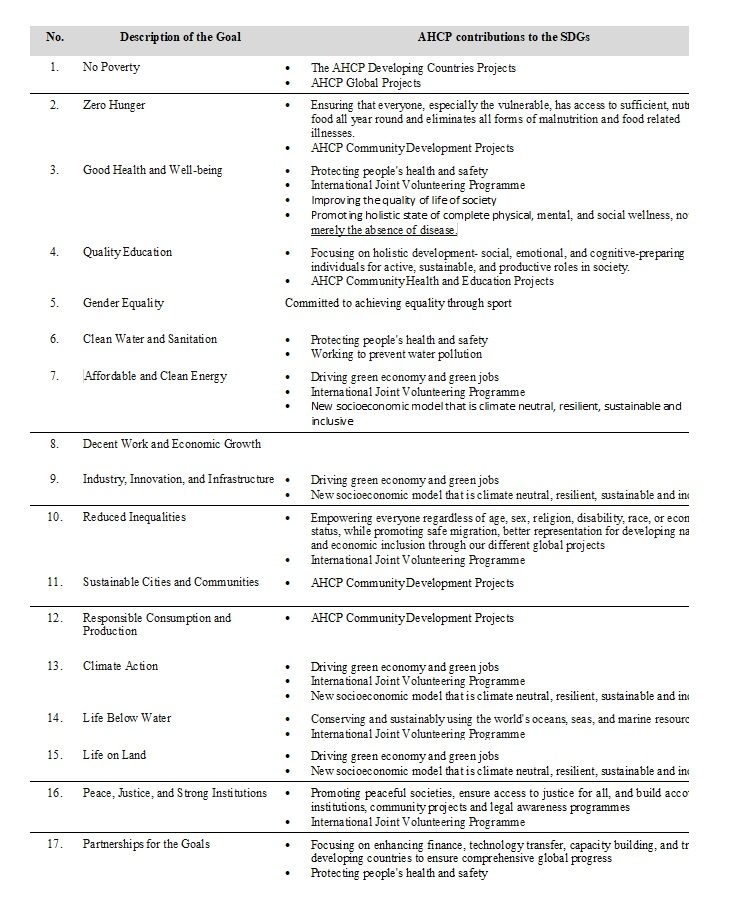
Summary of the 17 SDGs and the AHCP Positions
Summary of the 17 SDGs and the AHCP Positions on them can be found in table 1 on the right hand side of this section.
Conclusion
The 17 Sustainable Development Goals (SDGs) serve as a global "to-do list" for people and the planet, aiming to end poverty, protect the environment, and ensure peace and prosperity by 2030. As of 2026, the goals have driven significant global improvements, though many targets remain off-track due to recent crises like the COVID-19 pandemic and rising conflict. Despite these successes, global conflicts, economic instability, epidemics, health inequalities, access to healthcare issues and climate disruption have endangered the 2030 targets. The goals are interconnected, meaning action on one (like education) directly impacts others (like reducing poverty).
For more information, please contact info@ahcpworld.org
SECTION 3:
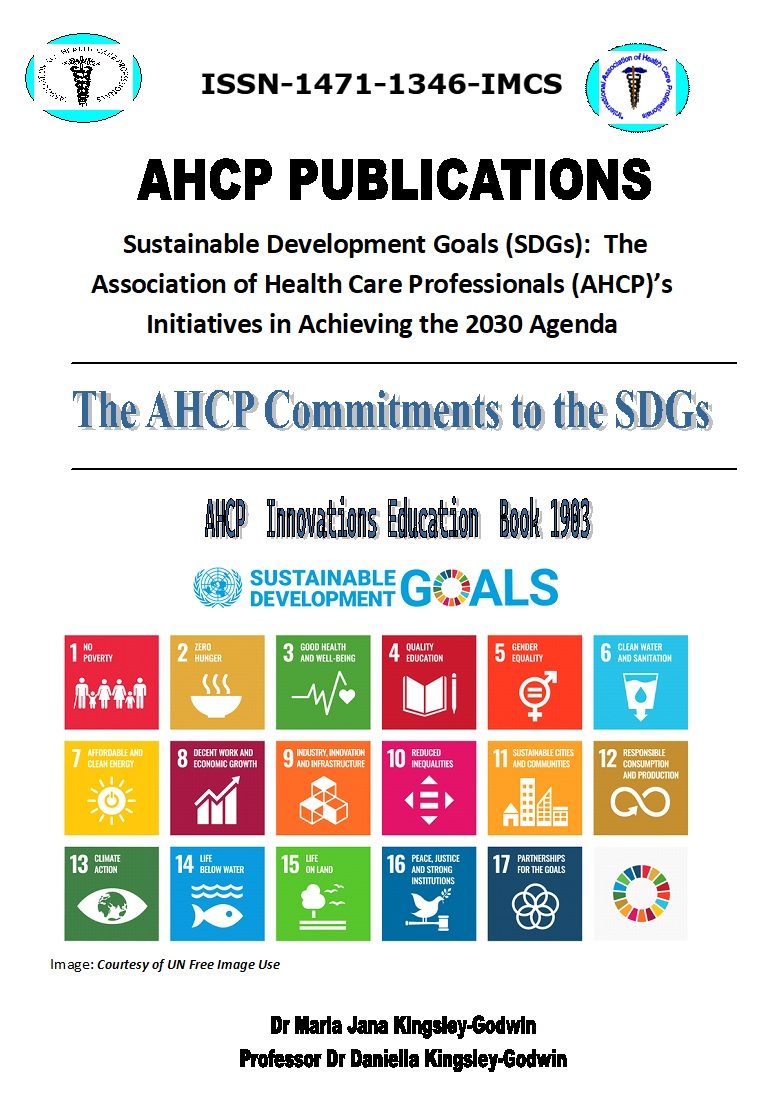
The AHCP Commitments to the SDGs
Sustainable Development Goals (SDGs): The Association of Health Care Professionals (AHCP)’s Initiatives in Achieving the 2030 Agenda
Abstract
The 2030 Agenda for Sustainable Development, adopted by all United Nations Member States in 2015, is a shared global blueprint for peace and prosperity, featuring 17 goals (SDGs) to end poverty, protect the planet, and ensure equality by 2030. It focuses on sustainable development, covering economic, social, and environment. The purpose of this teaching/workshop document is to provides information for the understanding of the 2030 Agenda and the SDGs, and to describe the AHCP’s commitments to meeting the 17 SDGs produced by the UN in September 2015.
Keywords: 2030 Agenda, United Nations, Sustainable Development Goals, SDGs, teaching, AHCP
Teaching and Learning Information
Exploring The Effective Teaching and Learning Methods for the SDGs
LEARNING OBJECTIVES
At the end of the sessions, the participants would have the knowledge and understanding of the following:
- Introduction to the 2030 Agenda
- Explanation of the 2030 Agenda and why it is important
- The content of the 2030 Agenda
- The importance of the SDGs
- Ways that the SDGs can be achieved
- The AHCP’s commitments to meeting the 17 SDGs
TEACHING AND LEARNING METHODS
The session will use the following teaching and learning methods:
- Lecture
- Interactive group work
- Problem-based learning
- Group presentation
COURSE MATERIALS
Lecture slides prepared by the teacher, and articles, including reports used in teaching the course. Sources of the reports and articles that are part of the course materials and that are stated.
EVALUATION OF TEACHING/SEMINAR SESSION
Evaluation of the teaching session will be undertaken by the participants at the end of the session. An anonymous evaluation questionnaire will be given to the students/participants to rate each aspect of the session and overall teaching methods and materials provided. There will also be sections for participants to state their opinions and subjective feelings in all aspects of the teaching and learning methods used. This process will help in improving the teaching and learning methods and materials provided in the future for further improvement/development of the programme.
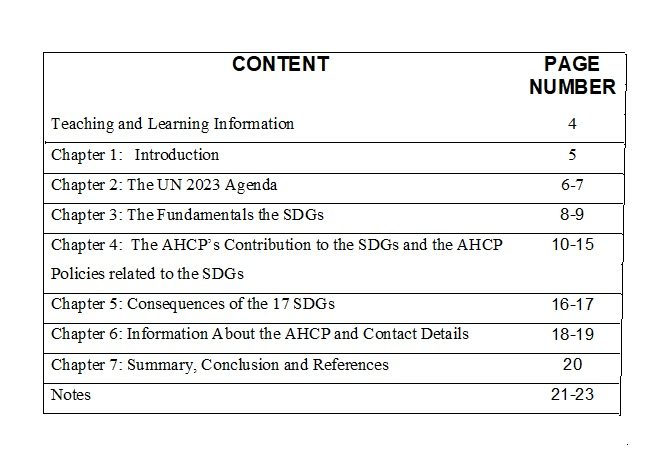
Chapter 1
Introduction
At the AHCP, we have incorporated the Sustainable Development Goals (SDGs) approved by the United Nations (UN) in September 2015 into our Operational strategy and our Governance and Sustainability System.
The 17 Sustainable Development Goals (SDGs) are a UN-adopted 2030 Agenda blueprint for global peace, prosperity, and planet protection. These integrated goals, covering social, economic, and environmental aspects, seek to end poverty and inequality while addressing climate change and protecting nature.
The 17 SDGs that make up the 2030 Agenda seek to achieve a sustainable future for people and the environment within a medium-term time horizon. The 17 goals are interrelated and present global challenges that require the involvement of all sectors of society – governments, the private sector, civil society and citizens.
The 17 SDGs are also a unique opportunity to develop innovative strategies and business models adapted to a world in profound transformation. The purpose of this teaching/workshop document is to provides information for the understanding of the 2030 Agenda and the SDGs, and to describe the AHCP’s commitments to meeting the 17 SDGs produced by the UN in September 2015 .
To Order the Book:
This is avaiable at the British Library, Legal Deposit Section. copies are also vaibale from other national and international libraries.
You can also order a copy of this book by contacting: info@ahcpworld.org
SECTION 4:
AHCP Information About The 2030 Agenda & The SDGs
AHCP information about the 2030 Agenda and the Sustainable Development Goals (SDGs)
Workshop/Seminar Teaching by the AHCP 2030 Agenda Steering Group.
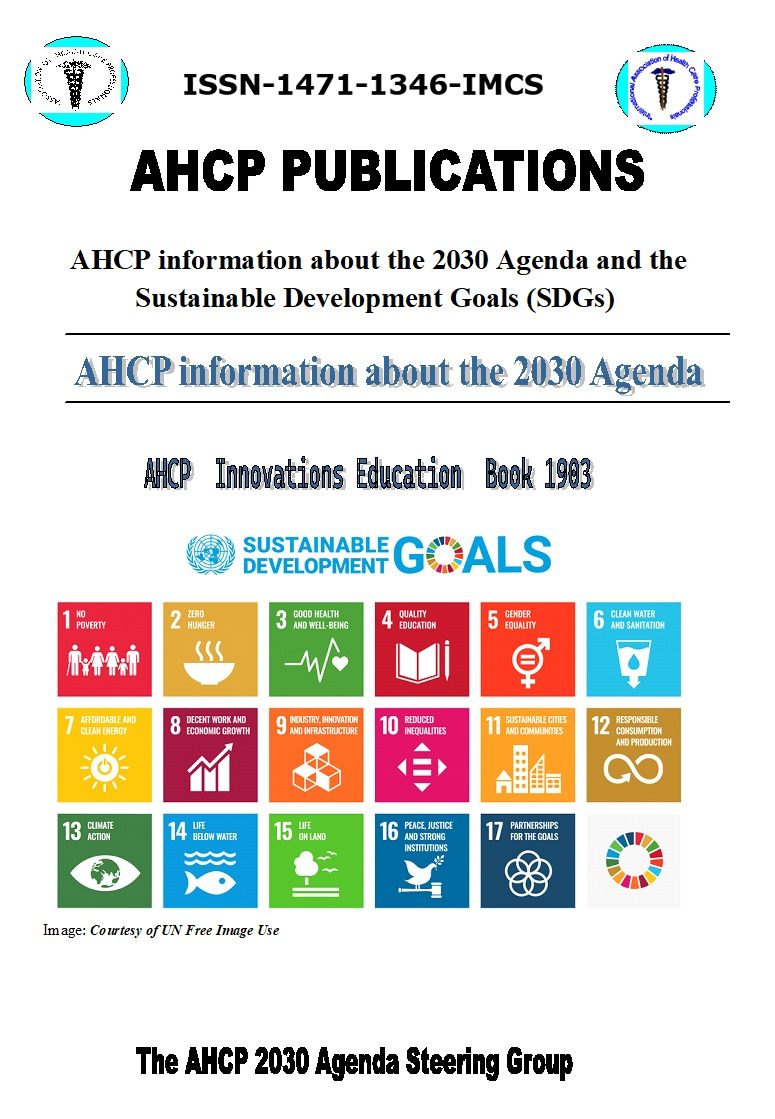
AHCP information about the 2030 Agenda and the Sustainable Development Goals (SDGs)
Workshop/Seminar Teaching by the AHCP 2030 Agenda Steering Group
Published for the The Association of Health Care Professionals (AHCP) Consortium, a Membership Service of the Association of Health Care Professionals (AHCP) International.
AHCP Publications Services
All Rights Reserved
No Part(s) of this publication can be copied or retrieved, without the prior author of the author and the AHCP.
the AHCP 2030 Agenda Steering Group, Hanover, Germany, January 2016
Copyright AHCP, International, 2016
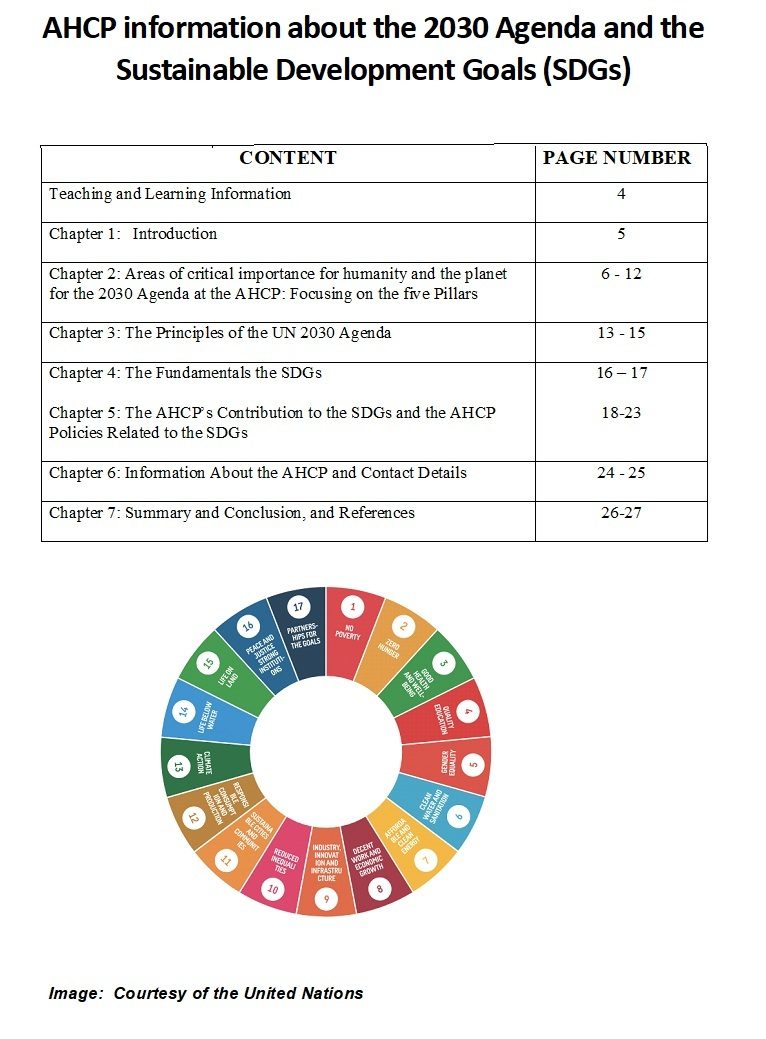
Teaching and Learning Information
Abstract
The 2030 Agenda for Sustainable Development, adopted by all 193 UN Member States in 2015, is a global blueprint for dignity, peace, and prosperity on a healthy planet by 2030. It is centered on 17 Sustainable Development Goals (SDGs) and 169 targets aimed at eradicating poverty, fighting inequality, and tackling climate change. The purpose of this session/book is to provide the principles, knowledge and understanding of the 2030 Agenda and the underpinning 17 SDGs.
Keywords: 2030 Agenda, United Nations, Sustainable Development Goals, SDGs, teaching, AHCP
LEARNING OBJECTIVES
At the end of the sessions, the participants would have the knowledge and understanding of the following:
- Introduction to the 2030 Agenda
- Areas of critical importance for humanity and the planet for the 2030 Agenda at the AHCP: Focusing on the five Pillars
- The Principles of the UN 2030 Agenda
- The Fundamentals the SDGs
- The AHCP’s Contribution to the SDGs and the AHCP Policies Related to the SDGs
TEACHING AND LEARNING METHODS
The session will use the following teaching and learning methods:
- Lecture
- Interactive group work
- Problem-based learning
- Group presentation
COURSE MATERIALS
Lecture slides prepared by the teacher, and articles, including reports used in teaching the course. Sources of the reports and articles that are part of the course materials and that are stated.
EVALUATION OF TEACHING/SEMINAR SESSION
Evaluation of the teaching session will be undertaken by the participants at the end of the session. An anonymous evaluation questionnaire will be given to the students/participants to rate each aspect of the session and overall teaching methods and materials provided. There will also be sections for participants to state their opinions and subjective feelings in all aspects of the teaching and learning methods used. This process will help in improving the teaching and learning methods and materials provided in the future for further improvement/development of the programme.
===================================================================
To Order the Book:
This is avaiable at the British Library, Legal Deposit Section. copies are also vaibale from other national and international libraries.
You can also order a copy of this book by contacting: info@ahcpworld.org